
In this quarantine, screen time has increased considerably. However, there are some activities to disconnect as much as possible. Do you want to meet them? Here we detail them.

Managing excessive use of screens during isolation is synonymous with well-being. While many overlook it, too much time on mobile devices carries risks for physical and mental health.
Many will think: " If I don't linger on my mobile, then what will I do with so many hours?" or " I need to watch movies and series so I don't go crazy . " However, there are other activities in which you could invest time.
You know why? Because there have been few studies that have reported on the damage caused by the excessive use of screens. Beyond affecting eye health, its risks include:
- Development of unhealthy or unhealthy lifestyle habits.
- Receiving inaccurate information.
- Access to harmful or inappropriate content.
- Privacy violation.
- Cyber bullying.
Now, in addition to exposing these risks, research has also provided some suggestions that may help reduce their negative impact. In the next space we detail them.
Tips for limiting excessive screen use
The suggestions made by the experts include the following guidelines:
- If your child is under two years old, you should simply avoid using screens.
- From the age of two, the use of screens should be limited to one or two hours a day.
- Ideally, avoid screens in bedrooms. It is better to leave them in other common places in the house.
- Pay attention, in the case of minors, to what they are observing.
- Learn to discern between what can be exact information or not.
- Use the mobile phone wisely, due to the ionizing radiation it emits.
- Explain to minors the risks of a possible invasion of privacy through social networks.
- Prohibit the use of mobile phones or other devices at important times, such as at meals or at family gatherings, for example.
- E viding children to entertain themselves only with electronic devices.
In addition to these keys to managing the excessive use of screens during isolation , emphasis is placed on minors, since they could be worse for them. Now, what can we do in our free time to avoid using the screens excessively?

Maybe you want to read: How does teleworking affect health?
Suggested activities to avoid excessive use of screens during quarantine
Below, we suggest a series of activities that you can do at home to get away from excessive use of screens during isolation, and in which the little ones can also participate:
- Playing with faces and gestures: without words, obviously; Thus, each team must guess the character they are trying to represent.
- Little blind chicken: it is a game that, although it is childish, is fun for everyone. It consists of blindfolding one of the players, and he must try to catch the rest, also guessing who he has captured.
- Exercise marathon: in which everyone begins to play with activities such as squats, exercise routines, sit-ups, among others. It is an ideal activity to take care of health and relieve stress.
- Board games: most people have them at home. If not, they can even be invented with few materials.
- Drawings to stimulate the imagination: prizes can be awarded to the greatest. Drawing is very beneficial for children.
- Plasticine constructions: Plasticine works are fun for the whole family and serve as a relaxation technique against stress and anxiety.
- Painting: either with the fingers, with brushes or other tools. It is entertaining and relaxing.
- Crafts: Everyone has something to finish, or they have an idea in mind at home, which can be from making a new bag to making hair bows. Just enough to dig into the imagination. Surely the results will be beautiful.
- Make theater : There are many scripts that include not only adults, but also children, so they can be printed and rehearsed until they have a play as a final result. Doing theater brings emotional benefits.

Also read: Keys to good postural hygiene
What else to do in quarantine?
As you will notice, it is only required to use the imagination because there are thousands of ideas. Others are having fun making sock puppets, karaoke, performances, or just cooking fun family recipes right now . If you want, you can also put into practice great ideas to work with recycled products.
Keys to managing excessive screen use during isolation
By beauty tips
The SAVERS method is a way to start the day that consists of 6 steps to perform each morning. Find out in this article how it is composed.

The SAVERS method is based on six morning exercises to help you achieve what you propose, both personally and professionally. More than a method, it is a philosophy of life that will change the way you see things and focus on your goals. Here we tell you what it is and how to do it.
What is the SAVERS method?
The SAVERS method was created by Hal Elrod and was published in The Miracle Morning. In it, he explains the six steps you must take in the first hour of the morning to focus your life and achieve everything you set your mind to.
Hal Elrod suffered a serious accident from which, miraculously, he recovered with hardly any consequences. In this book he talks about his experience and what he has been achieving with his philosophy of life, carrying out this ritual.
The method name reflects each initial letter of the 6 steps you must take in the morning. These are:
- S of silence (silence)
- A afirmation (statement)
- V of visualization (display)
- E of exercise (exercise)
- R reading ( reading )
- S of scribing (writing)
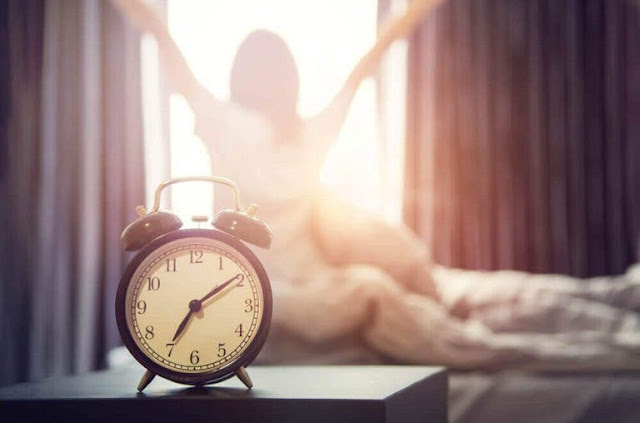
It is based on the belief that, depending on how we start the day, it will pass one way or another . Thus, if we start the day focused on what we want to achieve, it will be easier for us to achieve it.
Conversely, if we spend the first moments of our day paying attention to other less important things, such as checking WhatsApp or email, throughout the day we will deviate more times from our purpose.
It may interest you: Is it good to drink sparkling water every day?
Which are the steps to follow?
The first thing you should know about this method is that you will have to get up an hour earlier every morning. For some, this is an unnecessary effort, but the author highlights it as essential to have the necessary time to carry out all the steps.
1) Silence
It is about remaining silent the first 5 minutes when we wake up . This will reduce our stress and anxiety levels. These minutes can be spent meditating, reflecting, focusing on the breath, or establishing a purpose.
2) Affirmation
It is based on the repetition of certain phrases, purposes or goals that make us feel better about ourselves. We can use phrases that have occurred to us, song phrases or readings.
The basis is to repeat them every day to improve our mood and our self-esteem , with which we will start our day with much more strength and energy to achieve what we set out to do.
3) Visualization
This step will also take five minutes. We will dedicate ourselves to visualizing ourselves as if we have already achieved that objective that we have set for ourselves.
It may sound strange, but by repeating phrases that remind us that we can do it, and imagining that we have done it, it will be easier for us to focus on achieving the purpose.
4) Exercise
We will dedicate at least 20 minutes to this step. In these 20 minutes we will choose some type of exercise that we like to practice. This will serve to activate our body and fill us with energy .
The most recommended is that it be an aerobic exercise, which will activate us more. Despite this, we can perform any exercise that makes us feel good, be it a small yoga class , pilates or running .

5) Reading
Like exercise, we will also spend 20 minutes reading something we like. It can be the newspaper, the novel that intrigues us at the time, or any text that motivates or focuses our mind.
6) Writing
Finally, we will spend the final 20 minutes of this ritual writing . By writing we mean to write ideas that come to mind, purposes we have, or simply keep a personal journal.
We must do it by hand in a notebook dedicated exclusively to this purpose.
You may be interested: Keys to good postural hygiene
The SAVERS method within the routine
The author, and many followers, assure that by carrying out this routine continuously, your life and your way of seeing things will improve. Thus, it will be easier for you to achieve the purposes.
However , only you are the one who has the power in your life, and who should be used thoroughly to carry out this or other routines that make you reach your goals. It may not be exactly as its author describes it, but you can adapt its principles to your daily life.
SAVERS method: habits that change your life
By beauty tips
The wake-sleep cycle is part of the body's circadian rhythms and helps us to function properly. The changes in this cycle significantly affect the quality of life. We explain it to you.

We speak of the wake-sleep cycle to refer to the alternation that our body presents between the moments when we are awake and those in which we sleep. The waking part of the cycle is what happens while we don't sleep, and vice versa.
The nervous system is in charge of regulating the wake-sleep cycle. There are specialized neurons to coordinate function and neural tissues that serve as a biological clock.
This chronometer that we have some living beings inside, and that stipulates cycles for vital functions, is studied through chronobiology. And the denomination for these cycles is that of circadians .
Humans have three types of circadian cycles:
- Cigars: they are those that are completed in approximately 24 hours, like the wake-sleep cycle.
- Infraradians: they are those that last more than a day, like the menstrual cycle of women.
- Ultradianos: Complete in less than a day.
How is wakefulness different from sleep?
The wake-sleep cycle combines two moments in life: being awake and sleeping. Both stages are vital and very different from each other. Waking implies a state of consciousness, we have knowledge of what is happening and we use our senses to communicate with the environment around us. We can think during the vigil and act accordingly.
Being awake is a task for the nervous system , more precisely for the ascending reticular system, which is a set of specialized neurons. This tissue communicates with the thalamus and the cerebral cortex.
One of the most widely used neurotransmitters in wakefulness is norepinephrine, unlike sleep that uses melatonin. This substance regulates the attention we pay and the impulse to carry out activities.
Along with norepinephrine , serotonin is important , which fulfills relevant functions in the cerebral cortex, especially in the area of neurons that regulate vision.

Melatonin in the wake-sleep cycle
As we said well, melatonin is a key hormone in the wake-sleep cycle, since it is opposed to norepinephrine to introduce us to sleep. It is a substance that is produced cyclically, respecting the circadian rhythm.
Melatonin is produced in the pineal gland when it detects darkness. Rather, sunlight or artificial light send orders to the gland to stop its production.
During a night of relative normality, where the individual rests 8 hours, it will be at the fourth hour of sleep when he reaches the maximum production of melatonin. In this way, the hormone sustains rest.
Exposure to light stops the effect of melatonin, and therefore it is common for our wake-sleep cycle to be altered if we do activities in bright light before bedtime. The use of mobile phones , for example, is one of the most characteristic habits that delays the production of melatonin.
The substance can also be consumed artificially, which is why it is marketed in capsules:
- Medium effect , capable of sustaining sleep for no more than 4 hours
- Prolonged release , to simulate the natural effect and complete 8 hours of sleep
Find out more: Solar erythema: recommendations and care
Sleep-wake cycle disorders
The wake-sleep cycle can be altered . The disorders derived from a problem in the biological clock are diseases of the circadian rhythm, and there are some classified by medicine, such as the following:
- Phase delay: This happens in patients who fall asleep late, at dawn, and then do not wake up early in the morning. It can happen to anyone, but it is a disorder when it lasts for more than a month.
- Phase advancement: unlike the previous one, the individual has an unstoppable dream from the afternoon, which forces him to fall asleep. However, in the middle of the night he wakes up and can no longer fall asleep.
- Irregular rhythm: Here it is difficult to determine how the body behaves. The irregularity is that there is no parameter that the biological clock follows to mark the stages. One day there is a phase delay and another day there is a phase advance. It is classified as a disorder when it persists for 3 months.

- Jet lag : it is the disease of the traveler, well known for suffering from people who take a plane and go through different time zones in a few hours.
- Shift worker: it is the usual disorder of those who have jobs with rotating night shifts, such as the serene or the nurses.
- Hypernictameral: in this case, the circadian rhythm of wakefulness-sleep lasts more than 24 hours, and it is prolonged more and more. In practice, the patient usually adds sleep time each day, until he gets to sleep almost a full day.
Rest well to stay awake better
The wake-sleep cycle is the way it is for our bodies to function properly. A good rest is key for the waking period to be healthy . Conversely, staying awake in health leads to a pleasant night's sleep.
What is the wake-sleep cycle?
By beauty tips
Subscribe to:
Posts (Atom)


